


Fleas and ticks are a source of annoyance and a potential health threat everywhere. Although the seasons affect the activity of these insects, it is possible to have fleas or ticks in most seasons of the year because these insects can thrive in our homes. Dogs and cats that spend time outdoors are at equal risk for picking up fleas. However, since dogs spend more time outdoors, they are at greater risk for ticks than cats.
Fleas and ticks can cause two specific problems. First, they can cause discomfort and irritation to the skin through their bite, and in some cases can cause severe allergic reactions in both pets and people. Furthermore, both can carry disease and cause illness in pets and people. Some of these diseases can be fatal and others can cause severe, chronic and lifelong diseases. Prevention is the key to avoid these problems.
prevention
Prevention is important, as both fleas and ticks can infest a home.
There are many products on the market. Some are over the counter and some are with prescription. Some are standalone products and some are in combination with other treatments/medications. Some of them are rubbed on the skin, some are tied as a necklace, and some are given as food. Some of them can be consumed daily, some monthly, and some can last for several months. Depending on your lifestyle, your pet’s lifestyle, and your needs and preferences, your vet will help you choose the product that works best for you and your pet.
diagnosis
Fleas and ticks are small and sometimes difficult to spot on your pet. A physical examination is the most useful way to identify signs of fleas or ticks. Using a flea comb can help identify the presence of adult fleas or flea droppings. Flea droppings look like a brownish-black granular “dirt” that dissolves and turns red when placed on a damp paper towel. Fleas prefer the head and neck area of cats and the rump and tail area of dogs.
Ticks can vary in size depending on their life cycle and feeding stage. They can be the size of a pinhead or the size of a pencil eraser. Ticks can attach anywhere on the body, but prefer dark and hidden areas such as ears, armpits, groin, tail, and between the toes.
Fleas or ticks are sometimes difficult to find, especially on cats because they are constantly grooming. Sometimes the only symptom of fleas and ticks is skin irritation, and in these cases prevention is used as treatment.
Some areas of the world have fleas and ticks year-round, while others have “seasonal” fleas and ticks. However, since both fleas and ticks can survive in different climates and can live in your home and on your pet, year-round prevention is recommended.
Symptoms of fleas and ticks
Flea warning signs:
- Flea excrement (dark spots) in body covering
- Flea eggs (white spots) in body covering
- Excessive licking or scratching
- scabs or spots on the skin
- Anemia
Fleas can absorb 15 times their own weight in blood. Dogs or cats that lose a lot of blood can develop anemia, a dangerous reduction in the number of red blood cells in their blood. Puppies and kittens are especially at risk. Symptoms of flea anemia include pale gums and lack of energy.
- Flea allergy
Fleas are the most common cause of skin diseases in dogs and cats. When a flea bites, it injects saliva into your pet’s skin. This may cause an allergic reaction. Symptoms include severe itching, hair loss (especially on the front of the tail), scabs, and red, irritated skin that may lead to skin infections.
- tapeworm infection
The flea acts as an intermediate host for a tapeworm species. This means that the tapeworm must complete part of its life cycle in a flea. Flea larvae are infected by eating tapeworm eggs, and if a cat or dog ingests an infected flea while grooming, the tapeworm larva will develop into an adult tapeworm. Any pet with fleas is likely to have tapeworms as well.
Tick warning signs:
- Anemia
- Skin irritation or infection
- paralyze
Some ticks produce a toxin that weakens the muscles. Most dogs recover quickly once the ticks are removed.
You can feel and see ticks when you pet your cat or dog. They often stick near the head, neck, ears or paws. In cats, they are usually found around the ears and eyes. Ticks can be disease carriers. If you find a tick on your pet, try to remove it as soon as possible.
- Tick-borne diseases
Lyme disease, Rocky Mountain spotted fever, and Ehrlichiosis cause similar symptoms in dogs, including:
- Loss of appetite
- Fever
- Swelling of the lymph nodes
- Swelling or joint pain
These diseases can have serious complications, so prompt treatment is essential. Tick-borne diseases are uncommon in cats, but they can develop a tick-borne infection called cytauxzoonosis, which is often fatal.
- There is a vaccine to protect against Lyme disease in dogs that live in or travel to high-risk areas.
Today, the recommended treatments for fleas and ticks are:
- Oral chewable tablets: These tablets are an excellent choice for both prevention and treatment of fleas and ticks, while being safe for your pet and family.
- Topical treatments: There are many different topical flea treatments with different effectiveness and different ranges of use.
- Flea and Tick Collars: Tick collars are sometimes recommended based on your pet’s lifestyle
Flea treatment
Shampoos, sprays, powders, and topical or oral preparations are all available. Although most topical insecticides kill adult fleas, many have limited effectiveness because they only work for a few hours after application. This is especially true of anti-flea shampoos and powders. They kill the fleas on your pet at the time of use but have little lasting effect. The next day, your pet may have fleas again.
In general, cats strongly dislike being sprayed, so many cat owners prefer to use topical flea products. Flea collars may look convenient, but most do not work well (with the exception of flea collars that contain IGR). Flea collars, especially those with a strong pesticide smell, may be harmful to some cats or may cause a skin reaction or rash.
There are very effective products that should be used once a month or once every three months. Some of these products are easily combined with medications to prevent heartworms. Some products contain adulticides (kills adult roaches) that remain effective between scheduled doses, while others contain insect growth regulators (IGRs) that prevent larval stages from maturing. . For best results on flea infestations, use flea control products containing IGR.
treat
Use fine-tipped tweezers or disposable gloves to control ticks. If you must use your fingers, cover them with a tissue or paper towel.
Get the tick as close to the surface of the skin as possible. This reduces the chance of the tick’s head detaching from its body after removal.
Pull the tick out with steady and even pressure. Continue to apply steady pressure even if the tick does not immediately release. It may take a minute or two of constant, slow pulling to release the tick. There are also tools called Tick Twisters or Tick Keys that can be useful. Use them with caution, however, as twisting or shaking the tick may break off the mouthparts and leave them in the skin, increasing the chance of infection.
After removing the tick, thoroughly disinfect the bite site and wash your hands with soap and water. Home remedies, such as applying petroleum jelly or grease or touching the back of the tick with a hot match, are not effective and are not recommended. These techniques cause salivation and can actually increase the chances of contracting the disease.
Cleaning the environment
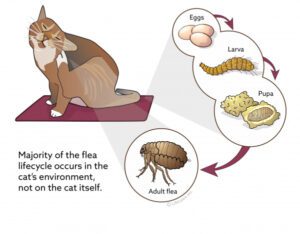
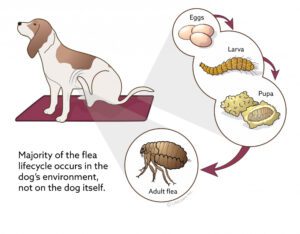
Fleas also feed on human blood and can jump onto your skin from your pet’s fur or bedding. Some people react badly to flea bites. If you scratch the area of severe itching, it can lead to skin infections. To prevent flea bites, keep your pets and home free of fleas. For every flea you see on your pet, vets estimate there are 100 more in your home.
When fleas lay eggs on your pet, some of the eggs may fall out and remain on your carpet, bed, or other furniture, laying more eggs. Carpets and damp areas are favorite fleas. Flea eggs and pupae are very hard and resistant to the effects of insecticides. Your pet’s bedding should be washed in hot water or replaced to remove the eggs along with the dead fleas. Regular and thorough vacuuming of carpets, floors and soft furnishings can remove large numbers of flea eggs, larvae and pupae. Vacuuming before applying a household spray is helpful because the vibrations cause the newly hatched fleas to emerge from the pupa, which are then killed by the insecticide.
Insecticides for flea control must be safe for domestic dogs, cats, and humans.
A number of products are available to kill the adult and larval stages of fleas and stop the flea life cycle, such as:
- Adulticide sprays for home use
- Sprays containing IGR for use at home
- Insecticides used by professional pest control companies