

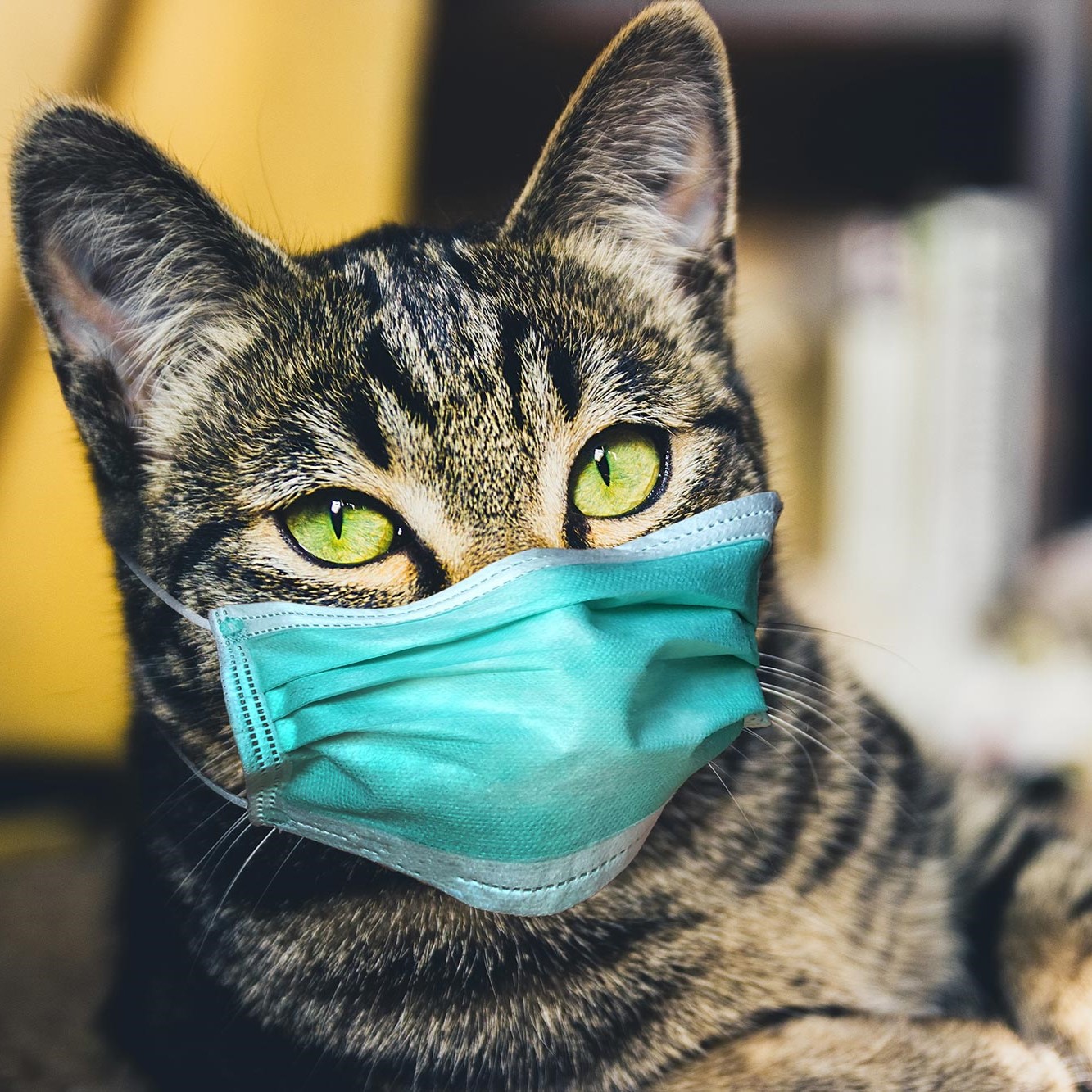
Feline infectious peritonitis (often called FIP) is a severe and usually fatal disease caused by the feline coronavirus. Coronaviruses are a family of viruses that mainly cause respiratory infections. This disease is seen all over the world. Although many cats can become infected with feline coronavirus, only a small number of them develop a severe form of the disease. Cats of any age and sex can get feline infectious peritonitis, but it is more common in cats 6 months to 2 years old. Although this disease can occur in any breed, purebred cats (including Persian, Abyssinian, Bengal, Birman, Himalayan, Ragdoll, and Rex) are more susceptible. Kittens raised in infected colonies may acquire the virus from the mother or from carriers (infected cats without obvious signs of illness) when their maternal immunity wanes at 5 to 6 weeks of age.
Most infections are likely to be caused by ingesting the virus. Transmission is also possible through inhalation. Since cats shed the virus through their feces, exposure to feces is the most important source of infection. The virus can also be spread through saliva, sharing a food bowl, sneezing, and through close contact. Also, this disease can be transmitted from the mother to the growing kitten through the placenta.
Two forms of this disease have been identified:
- Wet form (Effusion): In the wet form, there is an obvious accumulation of fluid in the abdomen and chest.
- Dry form (non-effusive): In the dry form, inflammatory cells accumulate in various organs such as the liver, kidneys, eyes, and brain.
Symptoms:
- Diarrhea
- Vomit
- Decreased growth
- Upper respiratory and lung symptoms
- Weight Loss
- Progressive distension of the abdomen due to fluid accumulation
- Fever 2 to 5 weeks
- Loss of appetite
- Depression
- Bleeding or accumulation of pus in one or both eyes and other eye changes including blindness
- About 50% of cats have symptoms related to involvement of abdominal organs (kidney, liver, spleen, pancreas, lymph nodes).
- The most common symptom of nervous system involvement is poor muscle coordination with mild paralysis, which leads to generalized failure of muscle coordination. Seizures (seizures), tremors, personality changes, and increased sensitivity to touch may also be seen.
Diagnosis:
Feline infectious peritonitis can be diagnosed based on the cat’s medical history, symptoms found during physical examination, and laboratory test results. An ultrasound or surgical biopsy may also be necessary. Diagnosis can be challenging, especially in cats that do not have fluid accumulation, and may require a combination of several types of tests.
treatment:
There is no specific treatment for feline infectious peritonitis. Up to 95% of cats with infectious peritonitis die from this disease. However, some cats may live for several months.
Treatment with medications that reduce inflammation and suppress immune responses, along with supportive care, can help the cat. Treatment offers the most hope for cats that are still in good physical condition, still eating, have not yet developed nervous system problems, and do not have additional disease (such as feline leukemia virus infection). If the cat shows no improvement after 3 days of treatment, it is unlikely to recover. If treatment does not help, euthanasia is often considered.
Prevention and control:
Cats with feline infectious peritonitis should not have contact with new cats, especially kittens that have not been exposed to the virus. Additionally, if your cat has died of disease, you should wait 2 months before bringing in another cat to make sure the virus is no longer in the environment.
A vaccine is available to help prevent feline infectious peritonitis. However, many adult cats have already been exposed to the virus, so vaccination will not prevent them from contracting it. The vaccine is labeled for use at 16 weeks of age, which may be too late to protect kittens in families where the virus is present.
Vaccination alone cannot be relied upon to control disease in the cattery. Other measures to reduce exposure to the virus include frequent removal of feces (the main source of the virus), early weaning, and isolation of cats that test positive for antibodies to the virus. These control measures should be combined with an overall preventive health program. However, in homes or facilities with a large number of cats, it can be very difficult to eliminate feline coronavirus, and as such, there is a risk of feline infectious peritonitis.